Ask the Experts | March 26, 2025
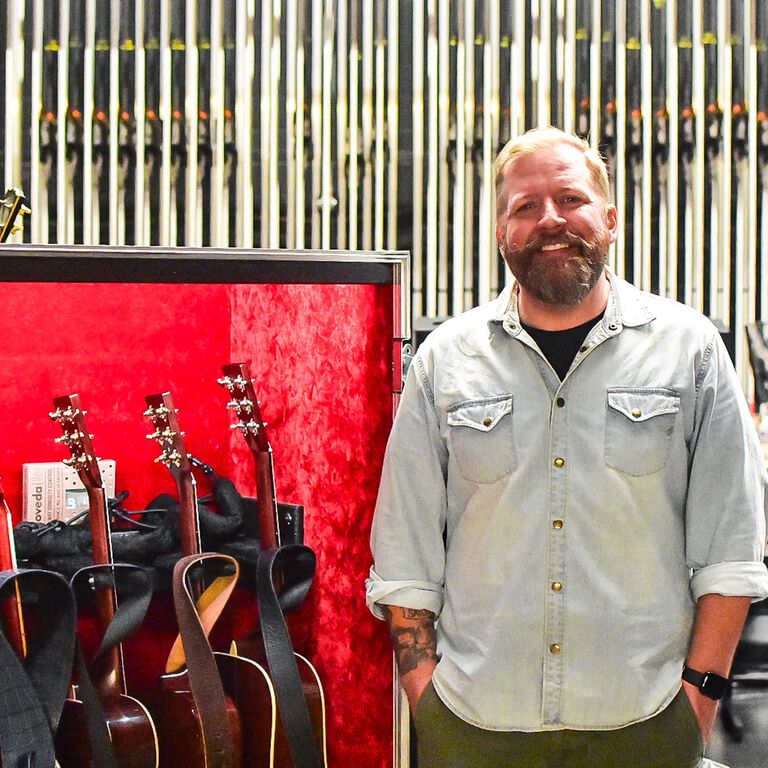
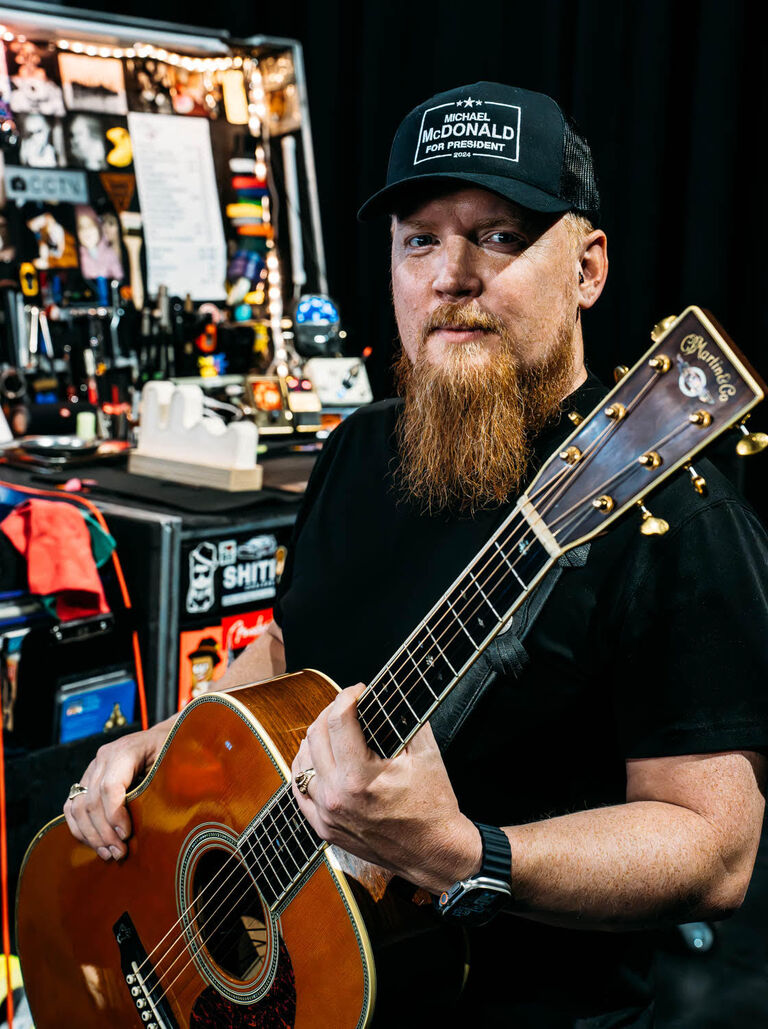
Michael Bethancourt: Guitar Tech for Jason Isbell
These questions aim to delve into various aspects of acoustic guitar care and maintenance, travel tips, unique situations, and funny stories from the road. We hope to offer insights and inspiration for both beginners and experienced players alike.

What is your official title?
I carry around a few different titles, like Production Manager and Stage Manager, but most visibly, I work as a guitar tech for Jason Isbell.
What artists have you worked with?
Currently, Jason Isbell and the 400 Unit. Past artists include Alison Krauss & Union Station, My Morning Jacket, and Lyle Lovett.
Can you share some insights into your daily responsibilities when working with high-profile artists and their acoustic guitars?
While the personalities of different artists tend to inform one’s approach with an artist and their guitars, there are three things that are always true in relation to the instruments: Make 'em play good. Make 'em sound good. Make 'em look good.
What are one or two essential tips you would give to beginner guitar players regarding acoustic guitar care and maintenance?
The two things I wish I’d known far earlier are one – climate is king. Temperature and humidity (or lack thereof) can and will wreak havoc on a guitar more quickly than one might realize. Learn how to protect the instrument from the elements via humidity control, appropriate fretboard oil, etc., and two – to not only adjust, but measure neck relief. It’s much easier to find the sweet spot of a guitar if you draw yourself a map. A few simple pieces (capo, feeler gauges, truss rod tool) keeps the guesswork out of it.
Could you elaborate on the common issues or challenges you encounter with acoustic guitars while on tour, and how you address them?
We’re restringing our guitars fairly often, and to get them fully show-ready, stretching strings is part of the process. Anything I can do to keep the stretching to a minimum while providing tuning stability will extend the life of the bridge and bridge plate. So, I string our acoustic guitars early in the day when I can, give the strings a slight tug to make sure they're settled at the tuners and the bridge. After that, I’ll bring the strings to pitch, check neck relief, and adjust as needed, and leave physics to do its thing with the guitar for a while. The tension on the string will do a fair bit of the work for you if you have the time. There will be more stretching later in the day, of course, but far less than if I’d only then restrung.
What specific steps do you take to protect acoustic guitars from environmental factors such as humidity and temperature changes, especially during travel?
Lately, I’ve been using two-way humidity control packs in our guitar vaults and in individual cases. They’re great for maintaining a semi-constant condition when the instruments are buttoned up. Once they’re out of their cases and into the wild, there will be adjustments to be made, but it’s helpful to have a more predictable baseline to start from every day. Additionally, I keep an eye on the weather, depending on the time of year we’re touring. In the summer, on the right day, it can get up to 150 degrees inside of our truck, so I carry a few empty cases in the event that I need to bring the guitars into a more controlled atmosphere during travel.
Can you share any memorable anecdotes or experiences you've had while working with touring musicians and their acoustic guitars?
A number of years ago, Martin wanted to build a signature guitar for [Jason] Isbell, so he and I got to spend the afternoon in the factory, picking out design elements, construction, hardware, tonewoods, etc. We took inspiration from a number of classic instruments but were able to give the guitar a fresh feel and an insane amount of volume. A uniquely fun day.
How do you approach troubleshooting and resolving technical issues with acoustic guitars during live performances or recording sessions?
The middle of a live performance is a tough place to have to troubleshoot an issue, especially if you’re constantly prepping different guitars for use throughout the show. Identifying the most key elements of a live package and having redundancies in place will save a lot of headaches should I need to make a quick change. In the studio, it’s more of the same, though it tends to be more focused on the instrument and less so on the signal path unless I’m also engineering.
What advice would you give to aspiring guitar techs on how to get started in the role?
Learn as much as you can. Work as much as you can. Be early. Stay late. Look people in the eye when you talk to them and be honest. Know enough to know when you don’t know enough. Guitars are sensitive little creatures and things can go bad if you make the wrong mistake, even in good faith.
What's the most valuable lesson you've learned throughout your career as a guitar tech, and how can it benefit guitar players of all levels?
Assuming an instrument is set up properly (neck angle, relief, nut/saddle height, etc.), I want to make sure that each point of the guitar where there is the most significant transferral of energy is clean and solid. Bridge, saddle, neck joint, and nut. All need to be working together to get energy from your hand to the strings and to the rest of the guitar. Points of contact should be smooth and free of any burrs or dirt/dust. A little lubricant at the nut can help to stabilize tuning, but too much can work against the vibrations of the strings if you’re not careful. The bottom of the saddle should sit flush in the bridge. The more surface contact the better.
What's the most unusual or unconventional venue you've had to set up for a performance, and how did you adapt to the unique circumstances?
The coldest ones always seem to stand out. Guitar strings react predictably to temperature changes. When it gets cold, they go sharp. When it gets hot, they go flat. Getting strings to proper pitch at a temperature that won’t change too much when I hand a guitar off feels like a one-legged a**-kicking contest, but it’s about as much as one can do. I’ll try to time my tuning as close to the hand-off as possible, leaving my hands on the strings in the interim to keep them similarly warm as if the artist was already holding it. Not a perfect system, but guitars are imperfect instruments, by and large. That’s the fun part. Coaxing perfection out of imperfect objects, employing imperfect methods. What’s more rock and roll than that?
What are some lesser-known factors or techniques that can significantly impact the tone and playability of acoustic guitars?
As bland an answer as it is, string gauge choice feels pretty misunderstood. Some guitars aren’t meant to have a set of 13-56s. Big Dreadnought? Sure. 00-15? Maybe not. Technique and player preference should obviously be considered, but I’ve witnessed great guitars lose their mojo when outfitted with the wrong set, and half-decent guitars come alive with the switch of a gauge. Some guitars are as picky as the people that play them.
Can you recall a funny or lighthearted moment involving a famous musician and their acoustic guitar while on tour that still brings a smile to your face?
The first that comes to mind happened right there in Nazareth, Pennsylvania, at the Martin factory. I was on tour with Alison Krauss & Union Station for the first time, and a few of us made the trip on our day off. We got to go through the museum floor and play a few of the more iconic guitars I’ve ever come across. Passing around and playing historic instruments with some of the best pickers in the world is not a thing one forgets easily.
What's the most unexpected or unconventional request you've received from a musician regarding their acoustic guitar setup or maintenance?
Not really a request, per se, but my first day with an artist many years ago, we’re doing production rehearsals and I’m meeting the guys in the band, chatting with them about set up preferences, strings, etc., and one by one, they all told me that they prefer to restring and set up their own guitars. All had different reasons, and they all made sense. One likened it to packing his own parachute. Another found it cathartic to tuck away in a dressing room and knock it out. One found it good practice for when they performed solo gigs without the support of a production team. I think I restrung two guitars two times each over the course of two years and managed to shave a few strokes from my handicap with all the extra time I had.