Member Spotlight | February 24, 2026
Brett Stair: Finding His Voice, One Song at a Time
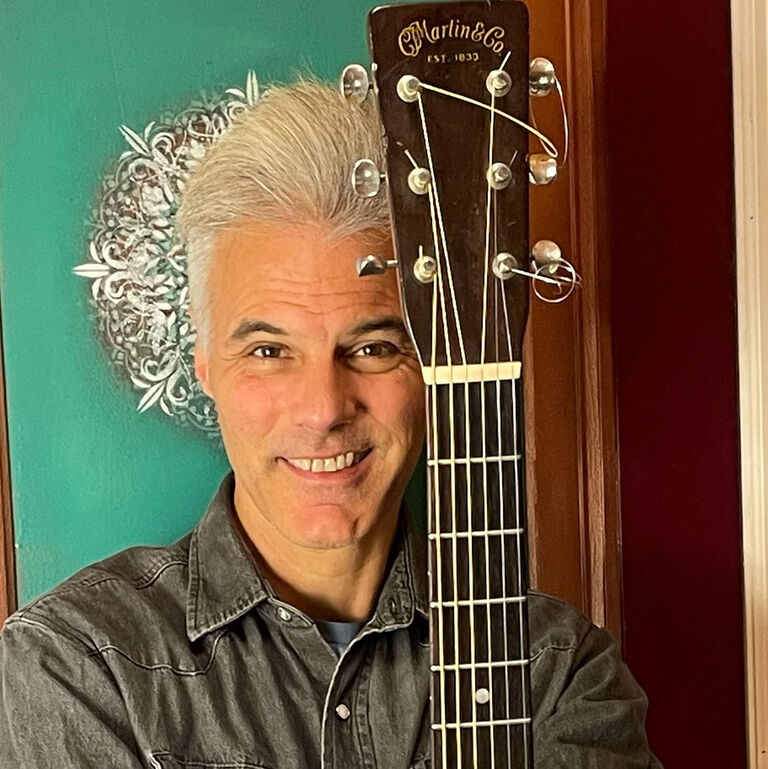
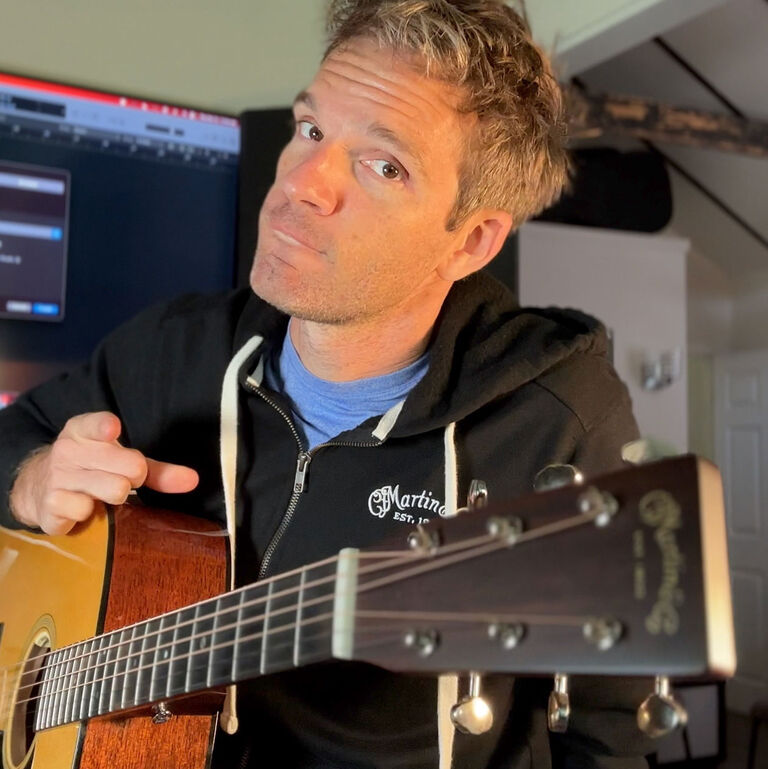
Country singer-songwriter Brett Stair found his sound in the warmth and resonance of his D-18, and he’s still building it—through relationships and lyrics

Brett Stair still remembers the moment he realized a guitar can carry more than a melody. It can carry a room.
He was onstage at Ridglea Country Club in Fort Worth, Texas, when a couple who had danced and enjoyed the music on a previous trip were suddenly gathering their things to slip out early. That’s when the husband, Larry, approached him with an apology and a story. Larry’s wife was having a bad day. She lived in a memory care facility, and every Saturday night he’d pick her up and take her out for drinks, dinner, and dancing because sometimes she remembers. Brett took it in, felt the weight of it, and met Larry with the kind of care that comes naturally to him. Then he did what the room needed in that moment: he kept the night moving, while quietly holding on to their story.
But the story did not stay put.
On the drive home, Brett retold it to his mom, who was visiting from Ohio, and that is when the songwriter part of his brain clicked on. The next thing he knew, the song was showing up in his head almost fully formed, written in pieces on the road, like it had been waiting for the right human moment to attach itself to. He sent Larry a rough work tape as a quiet thank-you. The next time Brett played at the club, Larry showed up with family and friends, and Brett played the song for all of them. “There wasn’t a dry eye,” Brett said. They danced. Brett cried while he played. And in that messy, beautiful overlap, he felt what it means to give a story back to the people who lived it. “That wasn’t mine,” he said. “That was theirs.”
That instinct, to turn real life into something you can hold, has been with Brett since before he ever owned a guitar.
In tenth grade, growing up in Arkansas, he was caught not paying attention in English class because he was writing lyrics. His teacher, Mrs. Shepherd, kept him after class. Brett was mortified, sure he was in trouble. Instead, she asked what he was doing, asked to see what he’d written, and pushed him to sing it. Then she gave him a nudge that changed everything: if he was going to keep writing, he needed a guitar to put music to it, and she told him to go to the local music store. Before he left her classroom, she added the line Brett still hears clearly: “Don’t let me catch you.” Permission and boundary in the same breath. Keep writing, just not when you should be listening. For Brett, it landed like a door opening. Someone had seen the thing he was trying to do and treated it like it mattered.
He didn’t know much about guitars then, so he kept it simple. He walked into Jack’s Music in Conway and told the guy behind the counter he wanted to play country music, trusting the rest from there. Not long after, he walked out with a brand-new Washburn D-10N and a job to do: put music to the words. In Brett’s world, the writing came first. The guitar came along because it gave the writing a place to live.

Years later, that same writer-first wiring still shows up in how he talks about growth. He’s honest about what he chases and what he does not. “I’ll never be a great guitarist, because I spend more time with words.” And still, he’s quick to add that the goal is not perfection. It’s momentum. Jump in, he tells newer players. Learn. Swim slowly, because the whole thing is vast, whether you’re learning guitar or learning songwriting. That discipline shows up in his own routine, too. Even while balancing a full-time job, he pushes himself to write three to four songs a week, and he’s the first to admit that not all of that is brand-new material. “Some of that might be revising one,” he said, “just trying to nail it down.”
Brett also knows that progress rarely feels poetic while you’re in it. Sometimes it feels like frustration, the kind that makes you want to quit right before something clicks. “You can’t be afraid to fail,” he said, “because you’ll fail less—and that’s when you get it.”
Brett’s connection with Martin started the way it starts for a lot of players who carry a quiet mental gatekeeping about what they deserve. He had always known the name. He liked Martins. But in his mind, they were for better players. “I wasn’t a good enough player to play a Martin,” he said. Then came a very practical problem: the guitar he was playing at the time sounded great, but it did not have the low end he was craving. He walked into Tone Shop Guitars in Southlake, Texas, and asked for something with more bass resonance, something that would serve him as a songwriter. The conversation led him straight to a Martin.
When he played a D-18, it did what a good instrument should do. It answered the question he was asking. Brett was drawn to the warmth and resonance of that mahogany voice, a sound that opened up a new lane for writing. He bought the D-18 a few months later, and it became the Martin he could not put down. The guitar rode with him through trips between Nashville and Texas, through humid nights where sweat literally rolled down the body, and into countless writing sessions.

From there, his collection grew the way a songwriter’s toolkit grows. He chased tones that made him feel something. A used Custom Shop Martin with an Adirondack top and wild East Indian rosewood spoke loudly enough that he could not leave it hanging on the wall. A D-35 came later for its scooped midrange and, as he put it, “sunburst and all that”—a different color in the palette. He was not collecting trophies. He was collecting voices.
And then he ran into the very real problem of working and traveling with a full-size acoustic. When Martin launched the all-wood Junior models in spring 2025, he knew exactly what he wanted: a travel guitar that still felt like a real guitar. “I want an all-wood guitar,” he said. Something he could throw over his shoulder for business trips, bring to an open mic on the road, plug in when needed, and keep his hands in the habit of playing.
By the time Brett was selected as one of eight writers to attend this year’s Texas Songwriter U, the growth was hard to miss. Being chosen felt like a signal that the work was starting to travel beyond his own notebook and into wider circles. He talked about the experience with a mix of humility and hunger, grateful for the opportunity and clear-eyed about what he wanted from it: to get sharper, to learn from people who have lived the craft at a high level, and to walk away with relationships that would keep pulling him forward.
More than anything, the retreat reinforced something he’s learned again and again in the writing life. Progress is built in rooms with other people, not in isolation. The feedback, the encouragement, the small shifts in perspective. It all adds up.

And it connects to why Brett believes music can reach places conversations cannot. In a conversation, you are managing the volley. You are thinking about what to say next. In a song, you can say the thing you would never quite get out otherwise, and the listener receives it in a more open way. It is invited in. People identify with it, with the emotions and the scenes, and suddenly they are holding something true that does not feel like it was aimed at them, even when it was written from a very specific life.
He has lived that truth in both directions. He has written a song for strangers that became theirs. He has written a song for his kids that became a way to say what he could not say cleanly in conversation.
During one of the final nights at Texas Songwriter U, while Brett was up onstage, one of this year’s mentors—Jack Ingram, Liz Rose, or Lori McKenna—asked a question that cuts straight through the noise: If you could only play one more song in your entire life, what would it be? Brett chose the one that mattered most. It was a song he wrote for his children, called “The Man I Meant to Be.” As soon as he finished, two people got up at the same time to hug him, including Jack Ingram. Brett does not describe it like a flex. He describes it like what it was: proof that the personal songs land, even when they’re too sad, even when they’re “not a real commercial song.” Those are the songs you write because you mean them.
He wrote “The Man I Meant to Be” after a divorce, carrying the ache of being a child of divorce himself and the weight of wanting to be a great dad. He talks about faith as a steadying voice in that season, an instruction to love his kids. He did not sit down and decide to write the song. It arrived while he was driving the loop around Austin, a title he’d heard a year earlier suddenly connecting to a full set of words. By the time he finished the loop, most of the song was there.

Brett still has a regret from high school that he carries like a small stone in his pocket. His grandmother took him to a bluegrass talent show in Arkansas, and after, she asked if he wanted to sit in a circle and play with some of the guys. He said no. He was scared. He did not think he could hang. It’s a feeling most of us recognize, that quiet voice that says you’re less than, that you don’t belong in the room. Looking back, he wishes he could reach through time and tell his younger self what he knows now: you did not have to be great. You just had to sit down. “It’s not about how good you are,” he said. “It’s about the love of the music… and the journey you’re learning.”
That is Brett Stair in a sentence: a writer who found his way into music and a player who has learned that the best songs come from paying attention when life hands you a story.
That mindset is part of what carried him through a big change recently. Brett left Texas and moved to Nashville, stepping closer to the rooms and relationships that shape great songs. The move didn’t happen because he never felt fear. It happened because he learned to move with it. And it helped that his wife Shanda warmed up to the idea, then became the steady support behind it. When self-doubt creeps in and that old thought of being “not good enough” starts to whisper, Brett says Shanda is the voice that brings him back to himself, reminding him to keep showing up and keep believing in what he’s building.
These days, Brett’s goals are pointed forward. He’s got an independent cut coming out, and he keeps showing up. More writing rooms, deeper relationships, and more chances to earn his way forward—trusting that the next step will come when he’s ready. He knows you cannot control the biggest outcomes, but you can chase them. And when he chases, you can hear the same thing Mrs. Shepherd gave him back in tenth grade: permission, with purpose. Keep writing. Keep playing.
Want to hear more from Brett and follow along with what he’s writing next? Visit brettstair.com to find his social links and see where he may be performing next.