Member Spotlight | July 8, 2025
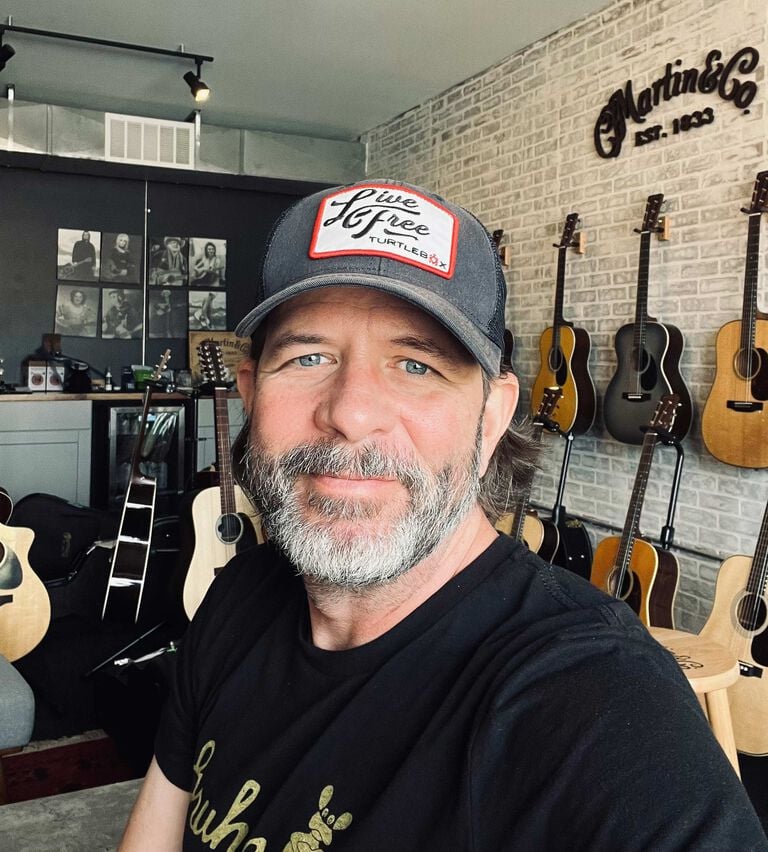
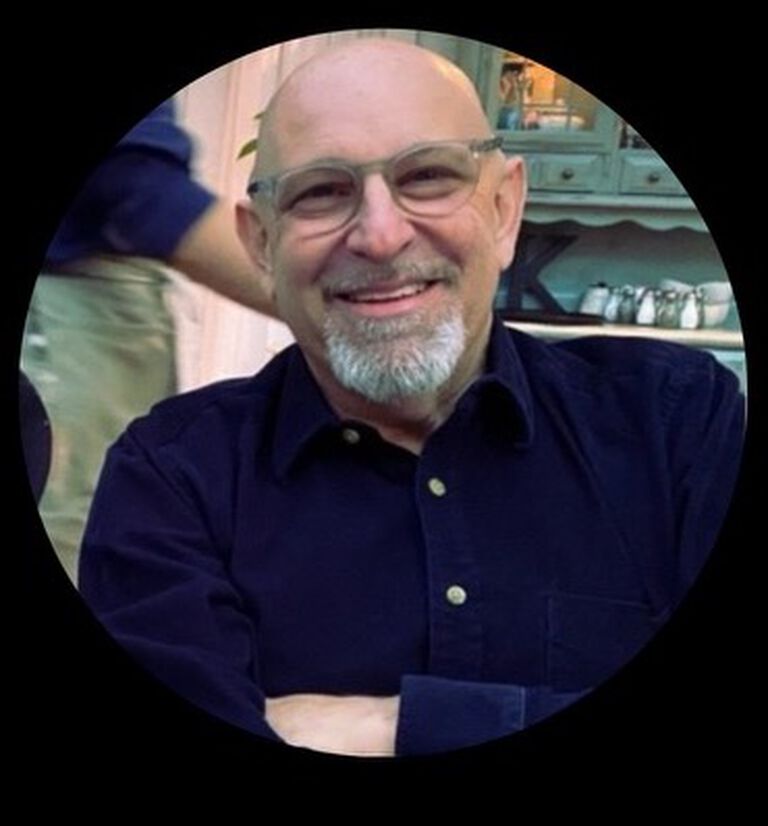
Jim Foley’s Guitar Journey
From a Martin DM to a stage under the redwoods—how a shared love of music helped build a community.

It was a Wednesday night in Northern California, and Jim Foley was on stage beneath towering redwoods, playing an open mic set with his longtime jam partner, Gerry. They were on a stage they’d built themselves after the pandemic, tucked behind a neighborhood beer garden that had once been just an asphalt slab next to an old convenience store. Now, it’s a community hub echoing with laughter, conversation, and music.
Jim had always loved projects. Rebuilding a boat. Restoring an old pickup truck. But this stage—this weekly gathering of musicians, neighbors, and friends—was different. He and Gerry were two players in sync, like surfers on a wave. Yet for most of his life, Jim had no connection to music at all.
“There was no music in my family,” he said simply. Born in 1964 in the suburbs of Pittsburgh, Pennsylvania, Jim grew up with no instruments in the house. In college, he won a Martin Sigma guitar in a raffle—“a silly little drawing,” he called it—but never touched it. Two months later, he wrapped a bow around it and gave it to his brother for Christmas. “I had no interest,” he said.
That would change.
By the time Jim turned 40, something shifted. He wanted to send a message to his children: that you’re never too old to learn something new. It wasn’t just about picking up an instrument—it was about modeling what it means to be a lifelong learner. “I’m kind of an always-curious guy,” he explained. He didn’t want to sit still. And learning guitar? “It was a perfect project for me because it has a never-ending timeframe.”

His first guitar—a Martin DM Dreadnought, bought in 2006 at a Bay Area Guitar Center—became his constant companion. “It felt big,” he said. “But rich. Bassy.” That guitar has been everywhere with him: ski trips, business travel, beach weekends. It has the wear to prove it—worn spots on the neck, scratches on the back. “I’ve earned those,” he said proudly.
Jim started slowly, with lessons from a series of instructors. The first two didn’t work out—one was rigid and theoretical; the other, more interested in hanging out than teaching. It wasn’t until his third teacher that things finally clicked. “He asked, ‘Why are you doing this?’” Jim recalled. “Nobody had asked me that.”
Jim’s answer was simple: he wanted to be able to sit around a campfire and play a couple of songs for his kids. But that modest goal was the beginning of something much bigger.
Over time, practice became habit, and habit became something more like necessity. “It’s like a vitamin,” Jim said. “If I don’t do it, it bothers me.”
Along the way, he shared his growing love of music with his children. His middle son, gifted with a natural sense of rhythm, once played drums in a middle school talent show band. His daughter, now in her twenties, is rediscovering the musical instincts she showed as a child. And all three, at different moments, have acknowledged their dad’s progress. “Each one of them said at some point, ‘You’re really getting better.’”
Jim’s story isn’t just about learning an instrument—it’s about building a community. During the pandemic, he and Gerry played in the back of a flatbed truck in neighborhood cul-de-sacs. That led to hosting backyard concerts. Eventually, those turned into something more lasting. When a new neighborhood beer garden started construction, Jim asked the owner, “What if we brought the music here?”

They did. The fourth event drew such a crowd that the owner asked, “Wanna help me build a stage?” Jim said yes, called his friends, and what followed was a modern-day barn raising—power tools, kids learning to use screw guns, someone making Home Depot runs. Today, that stage is the heart of a weekly tradition.

And even now, having moved part-time to Philadelphia for work, Jim is looking for the same rhythm. He tried launching an open mic at a local bar—the first one was mostly comedians. But he’s not discouraged. He’s still chasing that elusive group of two or three people who love the same music and want to play together.
He reflects often on what he would tell his past self—or any new guitarist just picking up their first Martin. One message stands out: “Give yourself at least a year. After that, you’ll go from having to practice to wanting to practice.”
He even created a one-page PDF for friends, outlining what he wished he’d known at the start: the chromatic scale, a couple of key barre chords—a roadmap for what can feel overwhelming at first.
There were times when he nearly quit. Life got busy. Progress felt slow. But his Martin guitar was always there, waiting. “Sometimes, when you put something down for a little while and come back, you’re better,” he said.
He recalls something his brother's guitar teacher once said. The teacher, who believed in reincarnation, had told Jim’s brother during a particularly frustrating lesson, "You're probably not going to get great. But you're making it easier for the next guy."
That seems about right for Jim Foley. Whether he’s handing down chord progressions, building stages, or just showing up to play, he’s always making it easier for someone else to start.

If you’re in the Philadelphia area and looking for a welcoming space to play or connect, Jim would love to have you join him. Check out the Facebook page for the Philly open mic night he’s helping to launch: Philadelphia Open Mic
And if you're curious about the original scene in Northern California that inspired it all, you can explore five years of community, music, and stage-building here: Northern California Open Mic